Home
      Diagnosis
      Treatment
      Pathology
      Variants
      CIDP info
      GBS
        IVIG
        Diet
        About Us
        E-Book
        Email Web Weaver
        Autoimmune diseases
        News
        Links
        F.A.Q.
 Clinics of Excellence

  Kidney stone removal   without surgery

 
   Myasthenia

     Myasthenia2

      Myasthenia 3

Polymyositis

 Dematomyositis

  Poly Dermyato

  Myositis

 Clinics of Excellence

  Kidney stone removal   without surgery


Eliminate risk of heart disease & stroke 

Quranic Shifa

Memory clinic

Depression & anxiety

Private treatment of addiction  & Drug Rehab

Sexual  disorders Clinic

Parkinson Clinic

Epilepsy Clinic

Pain Clinic

Bone disorders clinic

Joint disorder clinic

Skin repair clinic

Gene Manipulation

Neurology Clinic

TMJ CLINIC

We offer a lecture on personality development and self improvement.

Is your teenage child out of your control we do behavior modification treatment with positive results and a 90% turnaround.

Our Nanoparticle treatment units are for sale. Get your treatment at home.

Sex in autoimmune disease

Reduce weight

Drug reaction prevention

Prevent Osteoporosis

Some rheumatic disorders

 
 Skin repair Clinic
 Neck Pain
 Rabinder N Tagore
 Breast Lymph Drainage
 Osteoporosis
 Electronic Treatment
 Breast Size & Disease
 Female Sex Disease
 PARKINSON
 Memory problems
 Breast Lymph Drainage
 Kidney stone Buster
 Bras & breast cancer
 Lahore Clinic
 Lahore skin Clinic
 Pandas


Backpain

Fibromyalgia

Personality

Electrical Stimulation Therapy

Addison

Estrogen

DNA

Magnets and ageing

Aortic aneurysms

Kidney therapy

  antibiotics

 Want more sex

 Vitiligo 1

  Vitiligo 2

        Parkinson


Autoimmune diseases

   Autoimmmune diseases 1

  Autoimmune diseases -3

  Autoimmune aneurysm

  Auto

   Autoimmune info

  Autoimmune-4

  Autoimmune-5

  Autoimmune anemia

  Autoimmune inflammation

  Autoimmune Ear

Autoimmune Thyroid

  Autoimmune muscle

  Autoimmune diseases

  Autoimmunity

  Autoimmunity-2

  Autonomic

Magnesium

 Reading disorders

 Best New Diet

 DHEA Fountain of Youth

DHEA levels and cognitive functions

Do not give tots cold medicine

neurological effects of CIDP

Body goes against the grain

Celiac disease Info

More on Celiac disease

Anemia and celiac disease

Home for autoimmune disorders, information about autoimmune diseases

Lahore Sex clinic

lAHORE CLINIC

Everything about IVIg, Home to IVIg

Home to autoimmune diseases, causes, treatment, cure, e-book

Home to autoimmune disorders , treatment , causes, information

Fatty acids in autoimmune diseases

AUTOIMMUNE EPIDEMIC

Small fiber neuropathy 

Depression and breast cancer

dermatomyositis


Welcome to the CIDP  International organization Number -1 in autoimmune diseases
    Read the E-Book for reversal of autoimmune disorders a best  seller.                                       
   

Dermatatomyositis  Polymyositis  ( Please Visit our Home page for more info)

     The time for Nanomedicine look at Nano particles and treat the microscopic germs to get rid of diseases.


What are polymyositis and dermatomyositis?
 
How common are polymyositis and dermatomyositis?
 
What are the warning signs of polymyositis and dermatomyositis?
 
What causes polymyositis and dermatomyositis?
 
What can you do about polymyositis and dermatomyositis?
 
Additional Tips for Living Well


Need Help Contact Us  (We have a New treatment protocol)
What are polymyositis and dermatomyositis?  
 

  • Polymyositis (pronounced pah-lee-my-o-site-iss) is a disease that causes muscles to be weak.  After a person has had polymyositis for a long time his or her muscles can get smaller.
  • Polymyositis can affect the muscles in any part of the body.  It can also affect the lungs and the heart.
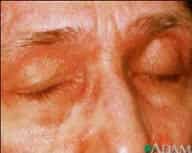
  • It is called dermatomyositis (pronounced der-ma-toe-my-o-site-iss) when the skin is also affected.  It can cause skin rashes all over the body.
  • Both polymyositis and dermatomyositis are chronic  autoimmune diseases.  This means that they can last a very long time and they come in attacks like waves in the sea..
  • With both forms of the disease, there may be times when the symptoms are stronger (active periods) and then periods when the symptoms lessen (remissions).


How common are polymyositis and dermatomyositis?  
 

  • They affect 15,000 (1 in 2,000) .
  • Women are affected by polymyositis and dermatomyositis twice as often as men.
  • These diseases occur most often in children between the ages of 5 and 15 and in adults between the ages of 50 and 70.

Polymyositis and dermatomyositis can occur at any age but are most common in children and adults over age 50. More adults than children get these diseases. 

One to five new cases per 100,000 are seen each year.  Women are affected by polymyositis and dermatomyositis twice as often as men.


What are the warning signs of polymyositis and dermatomyositis?  
 
  • The main warning sign is muscle weakness.  Usually the first muscles affected are in the hips and thighs, though any other muscle in the body can be affected. 
  • It may be hard to climb stairs, get dressed or get out of bed.
  • Pain in the joints between bones.  However, the joints are usually not warm or swollen, as with some other forms of arthritis.
  • Deep red (almost purple) rash, usually on the face, scalp, neck and chest.  However, the rash can appear on any part of the body.
  • Coughing and shortness of breath.
    · It may also be hard to swallow.

Muscle weakness and pain
Usually, the main symptom of polymyositis is muscle weakness. At the onset of the disease it generally affects the thighs and hips.  If you have polymyositis,

you may have difficulty climbing stairs, getting off buses with high steps or rising from low surfaces. The distance you are able to walk may eventually be limited

because your muscles get too tired.

If your shoulders are involved, you may have trouble getting dressed, combing your hair or lifting heavy objects. If polymyositis affects your neck, chest and abdomen

 muscles it may be hard to lift your head from a pillow or get out of bed. Polymyositis can also cause you to have trouble swallowing or talking, though these are less

common results of the disease.
 
At the start of the disease your muscles may feel sore and tender.  Many people do not experience muscle pain; it occurs particularly in people with rapidly progressing disease. 

 The muscle pain and tenderness usually goes away with treatment. After having the disease for a long period of time you may lose muscle bulk overall and the affected muscles

may appear thin and ‘wasted.’

Skin rash
When a skin rash accompanies polymyositis, the term dermatomyositis is used to describe the disease. If you have dermatomyositis you will have muscle weakness and will

 develop a rash, most often on your face, scalp, neck and chest. The rash can also appear on your hands and fingers (often the knuckles), elbows, knees, ankles, upper arms and thighs.

 The rash is often deep red in colour (almost purple) and in some areas may be slightly raised.

Joint pain
Joint pain commonly occurs during periods when the disease is active, but the joints are not usually warm or swollen, as often happens with other forms of arthritis.

Lung involvement
Polymyositis and dermatomyositis can cause weakness of the muscles required for breathing. They may also cause fibrosis (build up of excessive fibrous tissue) of the lungs. 

If you have one of the diseases and your lungs are involved you may experience coughing and shortness of breath.

Heart involvement
In rare cases myocarditis (inflammation of the muscular walls of the heart) and congestive heart failure (heart disease accompanied by breathlessness and excessive

retention of sodium and water) can occur as a result of polymyositis or dermatomyositis.

Calcium Deposits
Calcification (pronounced cal-si-fi-kay-shun) is hardening of skin and muscles as a result of calcium salt deposits. Calcification doesn’t often occur in adults with the disease,

but children with dermatomyositis may develop calcium deposits years after the disease starts. The deposits generally develop in the shoulder, pelvis, hip,

 calf and thigh and may severely limit motion. The masses that develop under the skin can rupture and the calcium salts may drain.

Another physical finding in dermatomyositis is the "machinist hands" with cracking and fissuring of the distal digital skin of the fingerpads.


What causes polymyositis and dermatomyositis?  
 
  • With polymyositis and dermatomyositis, the body’s immune system makes a malfunction  with these diseases the immune system attacks healthy tissues.
  • What triggers this process is unknown.

Polymyositis and dermatomyositis are autoimmune diseases.  This means that they begin with the immune system (which normally protects the body from germs, viruses, and bacteria)

malfunctioning.  It generates antibodies that attack healthy tissue in different parts of the body. The cause of polymyositis and dermatomyositis is unknown, though researchers suspect

that environmental factors (such as viral infections) may play a role, as may genetic factors (meaning risk of getting the diseases may be inherited).


What can you do about polymyositis and dermatomyositis?   
 
  • If your doctor thinks you have polymyositis or dermatomyositis, he or she may refer you to a rheumatologist (pronounced room-a-tol-o-jist)
  • A rheumatologist is a doctor who has received special training in the diagnosis and treatment of problems with muscles, joints and bones.
  • Your doctor may order certain laboratory tests.  He or she might perform a test called an EMG.  This test measures the electric current in your muscles. 
  • He or she might also cut away a very small piece of muscle to be tested in a laboratory.
  • There is no cure for polymyositis or dermatomyositis, but there are things you can do to manage the disease.
  • Learn as much as you can about this disease.  Speaking with people who are specialists in arthritis care can provide you with the information you need.

There is no cure for polymyositis and dermatomyositis. The goal of treatment is to help in the management of symptoms. Establishing the correct diagnosis early is important because

something can be done to manage most forms of arthritis. 

To be able to diagnose whether you have polymyositis or dermatomyositis, your doctor will perform a physical examination and probably order laboratory tests, such as blood tests. 

One test, called a biopsy, involves cutting away a very small segment of muscle tissue for analysis.  Your doctor may also perform a test called an EMG.  With this test electrodes are

 taped to your skin and the electric currents running through your muscles are recorded. This shows whether your muscles are working properly.

A test called an MRI (magnetic resonance imaging) may also be done.  This test is somewhat like an X-ray, in that it creates a picture of the inside of your body.  X-rays are only used for

seeing bones though, and with an MRI a picture can also be taken of your muscles.

If you are diagnosed with polymyositis or dermatomyositis your active involvement in developing your prescribed treatment plan is essential. 
 

  • In most cases, oral cortisone is given to treat polymyositis and dermatomyositis. Cortisone is a steroid that reduces inflammation and can control your immune system.

Cortisone is a steroid that reduces inflammation and swelling and that can influence regulation of the immune system.  It is a hormone naturally produced by the body. 

 Corticosteroids are man-made drugs that closely resemble cortisone. 

The most common form of corticosteroid is called prednisone, taken in pill form. Prednisone use needs to be carefully monitored because of its many side effects,

and the drug must never be stopped abruptly. Some of the side effects from long-term use include cataracts, high blood pressure, sleep problems, muscle loss,

 bruising, thinning of the bones (osteoporosis), weight gain and increased risk of infections.  The goal with this and most drugs is to find the lowest effective dose

that will avoid as many of the side effects as possible.
 

  • People with polymyositis and dermatomyositis are also often given disease modifying anti-rheumatic drugs (DMARDs).  DMARDs try to stop the disease from getting worse. 
  •  They can take about two to six months before they make a difference.

ANTI-INFLAMMATORY medicine target the immune system and the processes causing the symptoms, but do not reverse permanent damage.  The most common of them are gold salts,                                                                                        

methotrexate, sulfasalazine, hydroxychloroquinine, chloroquinine and azathioprine.  A are usually given in addition to other medications.  They usually take a few months to make a difference

in the inflammation.  Side effects may include mouth sores, diarrhea and nausea.  More serious side effects, monitored through regular blood and urine tests, include liver damage,

and excessive lowering of the white blood cell count (increasing susceptibility to certain infections) and platelet count (affecting blood clotting).
 

  • Gamma globulin may also be given.  Gamma globulin is made up of protein from human blood.  It is given through a tube inserted into the skin.
Intravenous gamma globulin infusion has been used with some success in children with polymyositis and dermatomyositis, and in some adults with severe dermatomyositis.

If IVIg is given early it can slow the disease process. The research at Nanotech Lahore has shown that much lower dose of IVIg can be used if the drug is given subcutaneous. Some research                                                                                               for IVIg sublingual doses is also being done. The study is slowed due to excessive increase in IVIg price.

 Nanotech is concentrating their efforts at lowering the treatment cost by alternatives such as antibiotics, anti inflammatory fatty acids and anti infective colloid solutions of silver.
 

  • If you have polymyositis or dermatomyositis you should rest when the disease is active.
  • When the disease is under control, exercise will help keep your muscles from becoming too weak.
  • The key is to strike a balance between too much activity (which can strain and tire muscles), and too little activity (which can increase pain and stiffness and lead to further weakness).
  • There are three types of exercises:
  • Range of motion exercises reduce stiffness and help keep your joints moving.  A range of motion exercise for your shoulder would be to move your arm in a large circle.
  • Strengthening exercises maintain or increase muscle strength
  • Endurance exercises strengthen your heart and give you energy. These exercises include walking, swimming and cycling.
  • Your doctor can help you find the exercise that best meets your needs.
  • If you exercise outdoors be sure to wear sunscreen.  If you have dermatomyositis, sunshine can make your skin rashes worse.


Rest is generally recommended during periods of active disease. Exercise should be done when symptoms are under control to keep muscles from becoming too weak. 

Always consult your doctor before beginning an exercise program.  He or she may also be able to refer you to a physical therapist who can advise you of the forms of

exercise that are likely to be helpful, and those that could be harmful. If the disease has impaired your breathing, your therapist can instruct you in breathing exercises.


Outcomes

Many people with polymyositis and dermatomyositis respond well to treatment. Some people only have a single attack of the disease and are able to stop taking medications after about a year.

Other people have recurrent attacks or active periods of the disease that respond to medication.  These people are often given regular low doses of medication to keep the disease

under control.  While it is less common, some people experience chronically active polymyositis or dermatomyositis and must receive continuous immunosuppressive treatments. 

Infections, such as pneumonia, can add to the severity of the disease.

Early diagnosis and treatment, prompt treatment of infections and careful monitoring of medications may reduce the severity of complications and improve outcomes.


CIDPUSA OFFERS COMPLETE REVERSAL  OF DISEASE BY SIMPLE TREATMENT CONTACT US.

 
www.cidpusa.org   www.cidpusa.org/P/ivig.htm   http://www.cidpusa.org/disease.html

Infections

Malaria

Pollution and diseases

Nanotech

Cancer & Flaxseed oil

Cancer therapy

Cancer Mycoplasma