Sensory Polyneuropathy
Search Cidpusa web Help for all diseases
Sat, 31 May 2008 17:55:07
By IMRAN KHAN, MBBS.,
Lupus nephritis
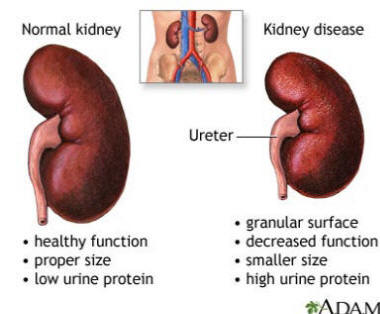
Lupus nephritis is an autoimmune inflammation of the kidney caused by systemic lupus erythematosus (SLE), a disease of the immune system. SLE typically causes harm to the skin, joints, kidneys, and brain.
The causes of SLE are autoimmune diseases. Many factors may play a role, including
gender—SLE is more common in women than men
heredity—a gene passed down by a parent
infections are the main cause
viruses environmental causes
What are the symptoms of lupus nephritis?
Lupus nephritis may cause weight gain, high blood pressure, dark urine, or swelling around the eyes, legs, ankles, or fingers.
However, some people with SLE have no overt symptoms of kidney disease, which must be diagnosed by blood and urine tests.
How is lupus nephritis diagnosed?
Diagnosis may require urine and blood tests as well as a kidney biopsy.
Urine test: Blood or protein in the urine is a sign of kidney damage
Blood test:The kidneys remove waste materials like creatinine and urea from the blood. If the blood contains high levels of these substances, kidney function is declining. Your doctor should estimate your glomerular filtration rate based on your creatinine
score.
Kidney biopsy: A biopsy is a procedure to obtain a tissue sample for examination with a microscope. To obtain a sample of your kidney tissue, your doctor will insert a long needle through the skin. Examining the tissue with a microscope can confirm the diagnosis of lupus nephritis and help to determine how far the disease has progressed.
How is lupus nephritis treated?
Treatment depends on the symptoms and test results. Medicines called corticosteroids can decrease swelling and inflammation by suppressing the immune system. Additional immunosuppressive drugs related to cancer and drugs used to prevent rejection of organ transplants may also be used. In severe cases, your doctor may prescribe cyclophosphamide (Cytoxan, Neosar) or mycophenolate (CellCept). Newer experimental treatments include a drug called rituximab (Rituxan). Please also see
Autonomic neuropathy
Gastrointestinal symptoms frequently accompany autonomic neuropathy. Nerves controlling intestinal muscle contractions often malfunction, leading to diarrhea, constipation, or incontinence. Many people also have problems eating or swallowing if certain autonomic nerves are affected.
What causes peripheral neuropathy? Peripheral neuropathy may be either inherited or acquired. Causes of acquired peripheral neuropathy include physical injury (trauma) to a nerve, tumors, toxins, autoimmune responses, nutritional deficiencies, alcoholism, and vascular and metabolic disorders. Acquired peripheral neuropathies are grouped into three broad categories: those caused by systemic disease, those caused by trauma from external agents, and those caused by infections or autoimmune disorders affecting nerve tissue. One example of an acquired peripheral neuropathy is trigeminal neuralgia (also known as tic douloureux), in which damage to the trigeminal nerve (the large nerve of the head and face) causes episodic attacks of excruciating, lightning-like pain on one side of the face. In some cases, the cause is an earlier viral infection, pressure on the nerve from a tumor or swollen blood vessel, or, infrequently, multiple sclerosis. In many cases, however, a specific cause cannot be identified. Doctors usually refer to neuropathies with no known cause as idiopathic neuropathies.
Physical injury (trauma) is the most common cause of injury to a nerve. Injury or sudden trauma, such as from automobile accidents, falls, and sports-related activities, can cause nerves to be partially or completely severed, crushed, compressed, or stretched, sometimes so forcefully that they are partially or completely detached from the spinal cord. Less dramatic traumas also can cause serious nerve damage. Broken or dislocated bones can exert damaging pressure on neighboring nerves, and slipped disks between vertebrae can compress nerve fibers where they emerge from the spinal cord.
Lupus page
SLE PAGE
SLE Home page
Lupus Nephritis
EBV & Lupus
Lyme
IgA nephropathy Fish oil
IgA nephropathy
Lupus nephropathy
Renal Failure
Hypertension & Kidney
Kidney Stones
Glomerulonephritis
IgG subclass deficiency
Immunodeficiency
Cupping
Osteoporosis
Autoimmune Diseases Treatment
Electrical Stimulation Therapy
magnets and ageing
Sand Bath for health
Glutathione super supplement
Sulphur Bath for Detox and health
Massage Cancer Cure
Water chestnut amazing nutrition
Infants women omega-3 for healthy baby
Selenium the specialfood
Capsaicin