CIDPUSA.org
Altered IgG
Inflammation
Immune Globulin
.jpg)
An old therapy for a variety of autoimmune diseases is to be made more efficient thanks to 10 years of research. The original treatment, intravenous immunoglobulin (IVIG), is an amalgam of specific antibodies made from the pooled blood plasma of thousands of healthy donors. It has been used on- and off-label in patients with lupus, arthritis, asthma and other immune disorders to varying degrees of success. New research conducted by Rockefeller University (NY, USA) shows that understanding how the therapy works at the molecular level can help create a new version that is much more potent.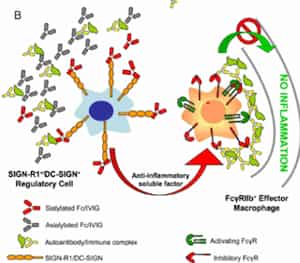
Jeffrey Ravetch, Head of the Leonard Wagner Laboratory of Molecular Genetics and Immunology at Rockefeller, has been studying the paradox of IVIG: immunoglobulin (Ig)G antibodies, which trigger autoimmune diseases, are what give IVIG its anti-inflammatory properties when pooled from healthy donors. After pinning down the molecular mechanism at the source of the contradiction- a single sugar molecule located at the very tip of some IgG antibodies - Ravetch and his collaborators produced an engineered IgG molecule that was 30 times more effective than IVIG alone when given to arthritic mice. "This paper provides a clear route for developing an alternative for IVIG, which could be of great benefit to patients with autoimmune diseases," says Ravetch. IVIg is also called IGIV as the pharma industry uses the term IGIV or Immune globulin Intra Venous.
.jpg)
The technology has been licensed to Centaurus Pharmaceuticals (MA, USA), which is working to develop a product that can be used in clinical trials. Ravetch is confident that the resulting drug could potentially provide relief for a variety of patients, especially for those where IVIG has little effect. In lupus, the current preparation has such low activity that the amount required to effect a noticeable difference exceeds the amount that can be realistically derived from the blood supply. However, according to Ravetch: "With the recombinant form you can make an unlimited, potent supply."
Centaurus is among several developers of antibody drugs in New England that have grabbed interest from big drug makers and venture funds. Monoclonal antibodies, cloned from antibodies that attack pathogens, are the fastest growing class of drugs on the global market, with $20 billion in annual sales and yearly revenue increases of 14 percent projected until 2012, according to Datamonitor PLC, a London pharmaceutical market research firm
CIDPUSA
World Wide Consultation by Internet
Sarcoid
CARDIOLIPIN
Homocysteine
Healthy Oils for cooking
Arjuna for hearts
Sleep apnea
Green tea for heart
Alzheimers
Transient Global Amnesia
Limbic Encephalitis
Autoimmune self attack
What is autoimmune
Autoimmune Risk
Autoimmune Rx
Autoimmune anemia
Autoimmune Ear
Autoimmune Thyroid
Autoimmune Fiber
Autoimmune Muscle
Autoimmunity summary
Autonomic Small
Myositis
Risk of heart disease & stroke
Depression and breast cancer
Alopecia general
Personality
Skin hair nail spa
memory retoration
Depression & anxiety
Addiction & Drug Rehab
Parkinson Clinic
Epilepsy Clinic
Pain Clinic
Joint disorder clinic
Iodine
Neurology Clinic
TMJ Clinic
Reduce your weight
Antibiotics
Vitiligo
Prevent Osteoporosis
We provide alternative information for treatment of autoimmune diseases. This is a 5000 page web site
SEE SERVICES LINK
Home
IVIG
Diet anti-inflammatory
Vitamin D deficiency
Burning Feet Home
Homeopathic Sleep remedy
Homeopathy & stress
Homeopathy home
Homeopathy intro
Neck Pain
Ocular Female diseases
Natural Makeup
Women Heart Attacks
Spices
Grain & Disease
Vinegar
Memory problems
Breast Lymph Drainage
Kidney stone Buster
Bras cause breast cancer
Skin repair Clinic
Pandas
Hepatitis
Sleep and Epilepsy
Sleep benefits
Snoring
young women getting strokes
Calcium supplements cause stroke in women
Homeopathic Hepatitis
Colostrum
Clinics of Excellence
Quran page
research in autoimmune diseases