Read our e-book for complete
published guidelines on diet, avoiding diseases and recovery.
We hear a lot about the menstrual
"cycle," which can make it sound as
though it happens like clockwork.
And we say that a woman who gets her
period every 4 weeks is "regular,"
as though there's something abnormal
about women who don't. In fact, most
women don't get their periods in
exactly the same number of days
after the last one.
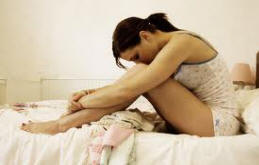
The Menstrual
Cycle
Most girls get their first
period between the ages of 10 and
16. This is known as
menarche (pronounced:
meh-nar-kee).
Doctors often talk about a girl's
monthly cycle the number of days
from the start of her period to the
start of the next one in terms of
a 28-day cycle. But 28 is just an
average figure that doctors use.
Women's cycle lengths vary some
have a 24-day cycle, some have a
34-day cycle. And a girl may notice
that her cycles are different
lengths each month especially for
the few years after she first starts
getting her period.
The first day a girl's period
comes is Day 1 of her cycle. Around
Day 5, her pituitary gland tells her
ovaries to start preparing one of
the eggs they contain for release.
One egg will mature completely. At
the same time, the lining of the
uterus becomes thick to prepare a
nesting place for a fertilized egg
in the event that the girl becomes
pregnant.
On or about Day 14 of a 28-day
cycle, the egg breaks loose (this is
called
ovulation).
The egg makes its way through the
fallopian tube into the uterus. If
the egg hasn't been fertilized by
sperm, it starts to fall apart.
About 2 weeks later, the lining and
egg leave a girl's body as her
period and the whole thing starts
all over again that's why we use
the word "cycle."
All this sounds very neat and
orderly. But a girl's body may not
follow this schedule exactly. It's
not unusual, especially in the first
2 years after menarche, to skip
periods or to have an irregular
menstrual cycle. Illness, rapid
weight change, or stress can also
make things more unpredictable
because the part of the brain that
regulates periods is influenced by
events like these.
A Normal Period Doesn't Have to
Be Regular
Some girls' periods arrive like
clockwork. Others get theirs at
slightly different times each month.
Many girls get regular periods most
of the time, but occasionally skip a
period or get an extra period during
times of pressure or stress. In
fact, you may notice that when you
go on a trip or have a major change
in your schedule your period is
late. All of this is perfectly
normal.
It's also normal for the number
of days a girl has her period to
vary. Sometimes a girl may bleed for
2 days, sometimes it may last a
week. That's because the level of
hormones the body manufactures can
be different from one cycle to the
next, and this affects the amount
and length of bleeding.
So how can you tell when you're
about to get your period? If your
cycle is not regular, you'll want to
pay attention to the clues your body
may give you. These include:
back cramps or stiffness
heavier breasts or breast
soreness
headaches
acne breakouts
disturbed sleep patterns
mood swings
bloating
Most of the time, irregular
periods are part of the normal
changes that can happen when you're
a teen. At some point as you grow,
your cycle will probably settle into
a recognizable pattern. This usually
happens by 3 years after your first
period.
However, some teens may develop
irregular periods or stop having
periods altogether as a result of
certain medications, excessive
exercise, very low body weight, or
not eating enough calories. Others
may develop problems as a result of
a hormone imbalance. For example,
disorders of the thyroid gland can
cause menstrual irregularities if
the levels of thyroid hormone in the
blood become too low or too high.
Some women have irregular periods
because their bodies produce too
much androgen, which is a hormone
that causes increased muscle mass,
facial hair, and deepening of the
voice in males and the development
of pubic hair and increased height
in girls. High amounts of androgen
can also cause hair growth on the
face, chin, chest, and abdomen, and
is sometimes associated with
excessive weight gain.
If you have any of these
problems, or if your periods are
irregular for 3 years or more, see a
doctor. The doctor may prescribe
hormone pills or other medications
or recommend lifestyle changes that
can help you to have regular
periods.
It's important to see a doctor if
you're sexually active and have
missed a period. This could be a
sign of pregnancy. You should also
see your doctor if you start having
periods that last longer than 7
days, are heavy, or are accompanied
by severe cramping or abdominal
pain.
In the meantime, if your periods
are irregular, try keeping some pads
or tampons in your backpack, just so
you'll have them handy in case your
period comes when you're not
expecting it.
The Bible diet is the
among oldest diet after the Torah.
And God said, See, I have given you every herb
that yields seed which is on the face of all the
earth, and every tree whose fruit yields seed; to
you it shall be for food. (Genesis 1:29)
Here
two sources of nutrition are herbs and fruits. The
Hebrew word for herb is
eseb a broadly
defined word which means green, grass, tender
shoot or herb. Falling under this definition
would be a wide variety of herb foods including
cereal grasses (wheat, barley, rice, etc.),
vegetables, beans, legumes, berry plants, herbs and
spices.
Furthermore, the seed
producing trees would also include a huge variety of fruits
and nuts, including two important Bible foods grapes and
olives. Not to be overlooked is the fact that God more than
likely intended for us to eat even the seeds themselves
since modern science is now uncovering a host of
health-building factors in seeds (and pits).
Here, then, is a list of food categories defined as Bible
foods:
Whole
Fruits
Whole brown Grains, Rice & Cereals
Whole Vegetables
Whole Spices
Whole Legumes
Seeds and Beans
Unprocessed meats
Sprouts
Nuts
Herbs
Health
guidelines according to Bible are.
1.
Breath pure air deeply,
For God breathed into Adam and he became a living soul.
2.
Bath daily in clean water and drink lots of water 3. Eat natural wholesome foods and chew a
food completely to bits for eating.
4. Pray daily to help clean
your sprite. Specially pray at night.
5.
Exercise on a daily basis.
6.
Work in the day and sleep at night. Wake up early in the
morning.
7.
Work for 6 days and give yourself one day of rest.
8. Go out in the sun , for light exposure. 9.
Fasting practice this
on a regular basis.
10.
Help other
people. Don't Fight, Don't kill innocent people,
Help mankind.
Diet according to the Bible
Eat fresh fruits and vegetables
according to the season.
Cook lightly.
Eat different foods and eat wholesome
food.
Eat a
variety of seeds and nuts but do not overdo it since
these foods are also very high in calories.
Use natural oils like Olive oil, eat it
uncooked.
Use dried
fruits such as raisins, dates and figs for desserts.
Dont eat PORK it makes you sick, eat
other meats in moderate amounts.
Dont take MSG, avoid splenda and diet
drinks, No chemicals in your diet.
Please see our diet guidelines based
upon the Bible and holy books. in the diet link above.
Dont take MSG, avoid splenda and diet
drinks, No chemicals in your diet.
Read our e-book
for complete published guidelines on diet, avoiding
diseases and recovery.