Stents
Stents uses
StentsNEW ORLEANS -
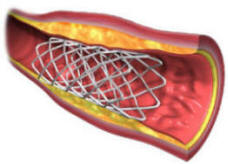
The results of a much-watched study comparing stents and drugs were revealed at a Boston Scientific meeting Sunday night. As most experts on both sides of the safety debate expected, the study, COURAGE, showed no reduction in heart attacks and deaths for patients who got a stent compared to those who didn't.
Shares of Boston Scientific (nyse BSE) which makes the most popular stent, fell more than 8% to $14 on the news. Shares of rival Johnson & Johnson fell 1% to less than $59.93 on the news. The full results will be available at 2 p.m. EST Monday.

The results were previewed two weeks ago by Forbes.com (see: . A recap of that story follows.
The 2,300-patient study, COURAGE, looks at two different ways of treating patients with angina, the crushing chest pain that results when the heart is not getting enough blood. Some patients were treated with angioplasty, a procedure in which an artery is opened with a balloon and then propped with a stent--a wire mesh tube. After that, they also received heart medicines, as needed. Others got the best medicines available, but did not undergo a procedure to open their arteries.
Drug-coated stents are too new to have been used much in COURAGE, but so far they look no different in terms of preventing heart attacks and deaths than existing treatments. The results were expected to be presented tomorrow morning here at the annual meeting of the American College of Cardiology.
Advocates of greater drug-coated stent use say that COURAGE may not be a fair test.
"I wouldn't be surprised if COURAGE, as designed, is a negative trial," Gregg Stone, director of cardiovascular research and education at Columbia University Medical Center, said two weeks ago. "The purpose of most stent procedures in patients with stable angina is to relieve chest pain and improve exercise capacity and quality of life."
But others will likely argue that the study should lead to a decrease in the use of stents. In an editorial in a recent issue of the journal Circulation, Spencer B. King, a noted interventional cardiologist at Fuqua Heart Center in Atlanta, wrote that he was unsure patients would opt for stents if they knew the devices would not prevent heart attacks and deaths.
"How many patients have interventions in which the only expectation is to reduce the use of nitroglycerin or to walk a bit faster?" King asked in his editorial. "Most patients anticipate a better prognosis and might opt for an extended course of medical therapy if they believe they are not putting their life at excess risk."---------
Read are links on left on how to avoid heart surgery and the stents simple guide on avoiding surgery.
Please continue to the Migraine caused by celiac disease
65