CIDPUSA.org Autoimmune diseases
Chewing Gum weight loss
Many sugar-free chewing gums contain a sweetener called
sorbitol. Sorbitol is a laxative which is poorly
absorbed by the small intestine. An article in this
week's British Medical Journal (BMJ) warns of the
dangers of excess sorbitol intake. 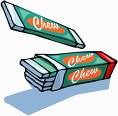
The warning comes after doctors came across two patients
who had chronic diarrhea, abdominal pain and dangerously
excessive weight loss. After lengthy investigations
which could not identify why the patients were losing so
much weight and had chronic diarrhea and pains, a
detailed analysis of eating habits put the problem down
to eating too much chewing gum with sorbitol.
One of the patients, a 21-year-old woman, had been
eating the equivalent of 18-20g of sorbitol each day.
The average stick of gum has about 1.25g sorbitol - so,
she was chewing through 15-18 sticks of gum each day.
The other patient, a 46-year-old man, was chewing about
20 sticks of sorbitol-containing gum plus approximately
200g of sweets (candy) each day - his total sorbitol
daily intake was about 30g, the authors wrote.
As soon as sorbitol intake was stopped, both patients
started having normal bowel movements (diarrhea
subsided) and normal weight gain was achieved.
The authors say consumers are generally unaware of the
possible side-effects of sorbitol, even though details
are included in the small print of foods containing it.
When consumers have gastronomical problems they are
unaware that they may be caused by the laxative effects
of sorbitol.
The authors conclude that sorbitol
consumption may not only cause chronic diarrhea and
functional bowel complaints, but also significant
unplanned weight loss of about 20% of body weight. Any
investigation of unexplained weight loss should include
a detailed dietary history with regard to sorbitol-containing
foods.
What is Sorbitol?
/p>
Also
known as glucitol, sorbitol is a sugar alcohol. The body
metabolizes it slowly. It is obtained by reduction of
glucose changing the ether group to an addition hydroxyl
group - hence the name sugar alcohol.
Sorbitol
can be found in cough syrups, sugar free mints, chewing
gum, diet foods, diet drinks and ice creams. Sorbitol
occurs naturally in some stone fruits and berries from
trees of the Sorbus genus.
Sorbitol provides
dietary energy of 2.6 kilocalories (11 kilojoules) per
gram, compared to sugar which provides about 4
kilocalories (17 kilojoules). Sorbitol retains 60% of
the sweetness.
As a food additive Sorbitol has
an E-number E420 and is categorized as a sweetener,
emulsifier and humectant.
Sorbitol is also used
as a non-stimulant laxative. It is either an oral
suspension or a suppository. It draws water into the
large intestine, stimulating bowel movements.
Thus
causing weight loss and danger of dehydration.
continue to page-2 of coconut oil benefitscontinued to cidp-studies page Chronic inflammatory demyelinating polyneuropathy
Links:
CIDPUSA.ORG
B-12 deficiency
Small Fiber neuropathy
neurological effects of CIDP
Nerve Fiber types
CIDP-EMG
Multi Focal Motor neuropathy
Lewis Summer
Tips for CIDP
Plasmapheresis
CIDP-INFO
CIDP-Rituxan
CIDP-GBS-Handbook
CIDP-family issue
CIDP-Cyclosporin
Polyneuropathy
CIDP-GBS children
Peripheral Neuropathy
ALS & CIDP
alcoholic poly neuropathy
IVIg, Home to IVIg